
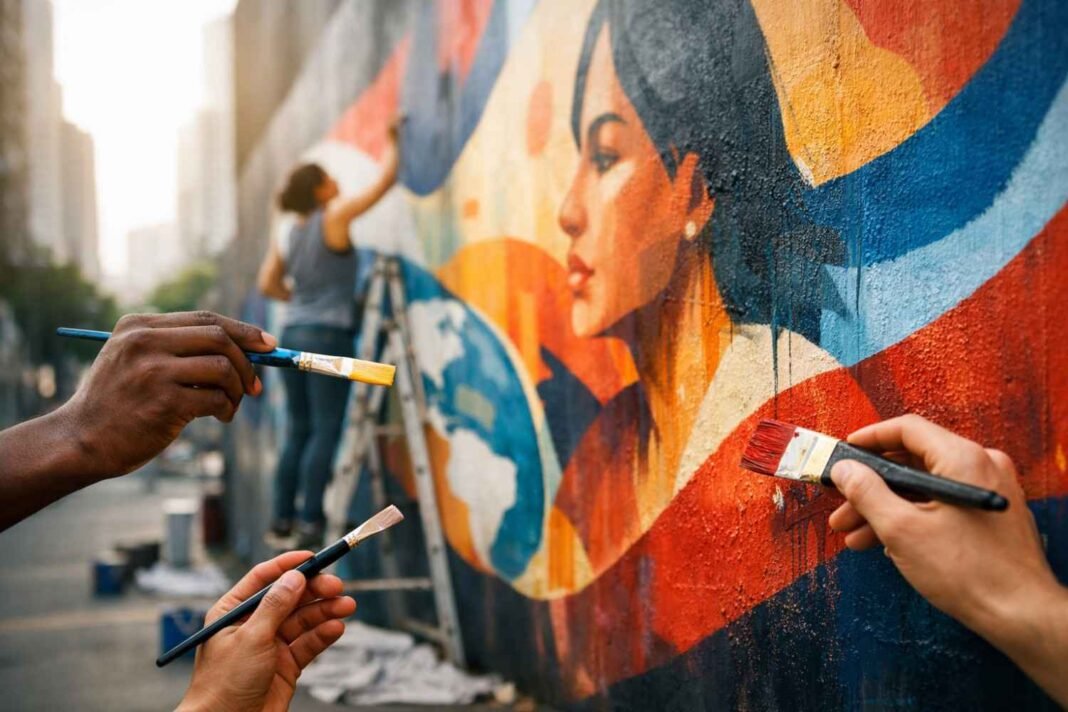

Visual culture has never been just about aesthetics. Across centuries and civilizations, images have carried ideas, emotions, resistance, and hope. From ancient cave paintings to contemporary digital installations, art has functioned as a mirror of society—and, at times, a hammer that reshapes it. Today, visual culture stands at the center of social dialogue, influencing how people think, feel, and act in a rapidly changing world.
In an era dominated by screens, symbols, and visual storytelling, art no longer lives only in galleries. It moves through streets, social media feeds, films, murals, and virtual spaces, shaping public consciousness in subtle yet powerful ways. This is the essence of visual culture: art that inspires change—creative expression that not only reflects society but actively challenges it.
Understanding Visual Culture in the Modern World
Visual culture refers to the way images communicate meaning within social, political, and cultural contexts. It encompasses fine art, photography, graphic design, advertising, film, fashion, architecture, and digital media. Unlike traditional definitions of art that focus on objects, visual culture emphasizes how people see, interpret, and respond to images.
What makes visual culture so influential today is accessibility. A single image can cross borders in seconds, reaching millions without translation. In this sense, visual culture has become a universal language—one capable of sparking conversations that words alone often cannot.
Art as a Catalyst for Social Change
Throughout history, artists have responded to injustice, inequality, and transformation. Visual expression has often emerged during moments of tension, acting as a form of resistance or awareness.
Consider how:
- Protest posters become symbols of collective movements.
- Street murals reclaim neglected spaces and tell unheard stories.
- Documentary photography exposes realities many would prefer to ignore
These works do more than decorate walls or pages. They invite participation, provoke discomfort, and demand reflection. Art that inspires change does not dictate solutions—it asks better questions.
The Emotional Power of Images
One reason visual culture is so effective at inspiring change is its emotional immediacy. Images bypass intellectual defenses and speak directly to human feeling. A single photograph can convey grief, resilience, or hope more powerfully than an essay.
This emotional connection:
- Builds empathy across cultures and experiences
- Humanizes abstract issues like migration, climate change, or inequality
- Encourages viewers to see themselves within a larger narrative
When people feel something, they are more likely to remember it—and act on it.
Visual Culture in the Age of Digital Media
The digital era has transformed how art is created and consumed. Platforms like Instagram, YouTube, and virtual galleries have turned everyday users into both creators and curators of visual culture.
This shift has:
- Democratized artistic expression
- Challenged traditional gatekeepers of art institutions
- Accelerated the spread of socially conscious visuals
Digital artists now blend activism with design, animation, and interactive media. Infographics educate, short-form videos mobilize, and digital illustrations reframe complex issues in accessible ways. Visual culture today is fast, fluid, and deeply intertwined with daily life.
Street Art and Public Spaces as Visual Dialogue
Street art occupies a unique place in visual culture because it exists outside conventional systems. Murals, stencils, and installations speak directly to the public—often without permission, but with intention.
In cities around the world, street art has:
- Given voice to marginalized communities
- Challenged political power structures
- Transformed public spaces into cultural landmarks
Unlike art confined to galleries, public visual culture cannot be ignored. It confronts passersby in real time, turning ordinary environments into sites of reflection and conversation.
Representation, Identity, and Visibility
Another crucial aspect of visual culture is representation, who is seen, how they are portrayed, and who controls the narrative, all of which matter deeply.
Art that inspires change often:
- Challenges stereotypes and dominant narratives
- Centers voices historically pushed to the margins.
- Explores identity, gender, race, and belonging
By expanding visual representation, artists help redefine cultural norms. Visibility becomes a form of empowerment, and art becomes a space where identities are not only expressed but validated.
Visual Storytelling and Collective Memory
Images play a significant role in shaping how societies remember events. Iconic visuals often outlive written accounts, becoming part of collective memory.
Think of:
- Photographs that define historical movements
- Film scenes that symbolize cultural shifts
- Memorial art that preserves shared experiences
Visual culture ensures that stories are not forgotten. It carries memory forward, reminding future generations of struggles, progress, and lessons learned.
When Art Moves People to Action
Not all art aims to inspire change—but when it does, its impact can be profound. Visual culture has supported fundraising efforts, influenced public opinion, and even shaped policy discussions.
Effective change-driven art often:
- Connects personal stories to larger systems
- Avoids preaching and instead invites interpretation
- Leaves space for dialogue rather than closure
The goal is not to provide answers, but to awaken awareness. Change begins when people start seeing differently.
The Future of Visual Culture
As technology evolves, so will visual culture. Augmented reality, artificial intelligence, and immersive installations are already reshaping artistic possibilities. Yet, regardless of medium, the core purpose remains the same: to communicate human experience.
The most powerful art will continue to:
- Reflect real-world concerns
- Engage diverse audiences
- Inspire critical thinking and compassion.
In a world saturated with images, meaning matters more than ever. Visual culture that inspires change will be the kind that slows us down, challenges assumptions, and reconnects us to shared humanity.
Conclusion: Why Visual Culture Still Matters
Visual culture is not a trend—it is a force. It shapes perception, influences values, and encourages action in ways that few other forms of communication can. Art that inspires change reminds us that creativity is not separate from society; it is deeply woven into it.
By paying attention to the images around us—and supporting artists who use their vision to question, reveal, and reimagine—we participate in the ongoing dialogue between art and change. And in that dialogue, new possibilities begin to emerge.