
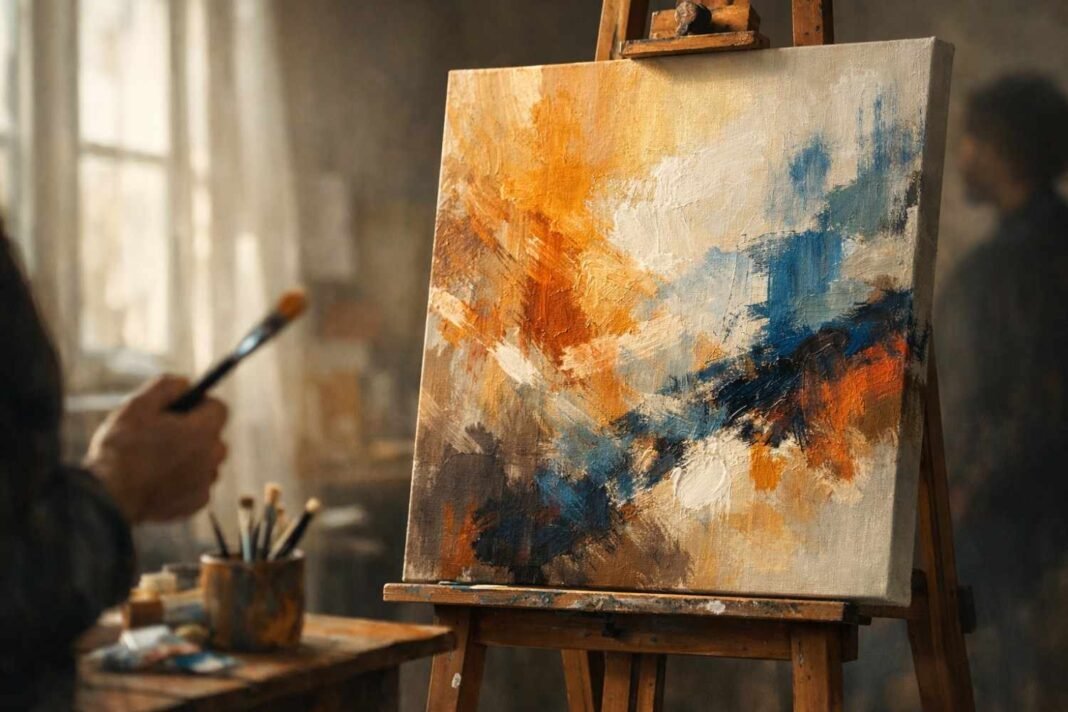

Art has never been just about what we see. Beneath every brushstroke, every splash of color, and every deliberate absence of detail lies a story waiting to be understood. Art & Expression: Stories Behind the Canvas is not merely a phrase—it is the essence of why art continues to matter in every era, culture, and generation.
From ancient cave paintings to contemporary digital installations, artists have always used the canvas as a silent witness to their inner worlds. The finished artwork may hang quietly on a wall, but the journey behind it is often loud with emotion, conflict, memory, and meaning.
The Canvas as a Language of Emotion
Before words, humans expressed themselves visually. Long before alphabets existed, marks on stone and pigment on skin told stories of survival, belief, and identity. That instinct never disappeared—it evolved.
For many artists, the canvas becomes a language when spoken words fall short. Pain, joy, anger, love, grief, hope—these emotions are often too complex to explain directly. Art allows them to exist honestly, without the need for explanation.
A single painting can hold:
- A childhood memory
- A political protest
- A personal loss
- A cultural celebration
- An unanswered question
This emotional layering is what separates decoration from expression. When art resonates deeply, it’s rarely accidental.
Every Artist Has a Story—Even When They Don’t Tell It
Not all artists explain their work, and that silence is intentional. Some believe meaning should be discovered, not dictated. Others feel their personal story is inseparable from the work itself.
Behind many iconic artworks are stories of:
- Rejection and failure before recognition
- Financial struggle and isolation
- Cultural displacement or identity conflict
- Mental health battles
- Quiet persistence without applause
Vincent van Gogh sold almost nothing during his lifetime. Frida Kahlo painted through physical pain and emotional heartbreak. Jean-Michel Basquiat transformed personal chaos into cultural commentary. These stories don’t romanticize suffering—but they remind us that expression often emerges from lived experience.
Art as a Reflection of Society
Art does not exist in isolation. It mirrors the time in which it is created.
When societies face uncertainty, art becomes bolder. During periods of oppression, it becomes symbolic. In moments of revolution, art becomes confrontational. Even minimalism, with its restraint and simplicity, often reacts against excess and noise.
Throughout history, art has:
- Challenged political power
- Questioned social norms
- Preserved cultural identity
- Amplified marginalized voices
The canvas becomes a historical document—not written in dates, but in emotions and perspectives.
Abstract Art: When Meaning Isn’t Obvious
One of the most misunderstood forms of expression is abstract art. Critics often ask, “What does it mean?” But abstraction isn’t about clear answers—it’s about honest feeling.
Abstract artists strip away literal representation to reach something deeper:
- Movement instead of objects
- Energy instead of faces
- Emotion instead of narrative
The story behind the canvas in abstract art often belongs as much to the viewer as to the artist. What one person sees as chaos, another considers freedom. That shared authorship is what keeps abstract expression powerful.
The Quiet Power of the Viewer
Art is incomplete without an observer. The moment someone stands before a painting, the story expands.
Your background, memories, and emotions shape how you interpret what you see. Two people can view the same canvas and walk away with entirely different experiences—and both are valid.
This interaction is what keeps art alive long after it’s created. The artist begins the conversation, but the viewer continues it.
Modern Art and Personal Expression in the Digital Age
Today, art has moved beyond traditional galleries. Social media, digital tools, and NFTs have changed how artists share their work and how audiences engage with it.
Modern artists often:
- Document their process publicly.
- Share personal stories alongside their work.
- Blend visual art with activism and identity.
- Create without waiting for institutional approval.
This transparency has made the stories behind the canvas more visible than ever. While the medium evolves, the purpose remains unchanged: expression, connection, and truth.
Why Stories Behind the Canvas Matter
In a fast-paced world driven by algorithms and instant consumption, art invites us to slow down. Understanding the story behind a piece deepens our appreciation—not just for the artwork, but for the human experience itself.
Art reminds us that:
- Everyone carries unseen stories.
- Expression can heal, challenge, and unite.
- Meaning doesn’t always need explanation.
When we look beyond the surface, we don’t just see art—we see humanity.
Final Thoughts
Art & Expression: Stories Behind the Canvas is ultimately about empathy. It’s about recognizing that every piece of art is the result of a moment, a memory, or a question that mattered deeply to someone.
The next time you stand before a painting, don’t rush to understand it. Sit with it. Let it speak. The story may not be obvious—but it’s always there, waiting quietly beneath the canvas.