
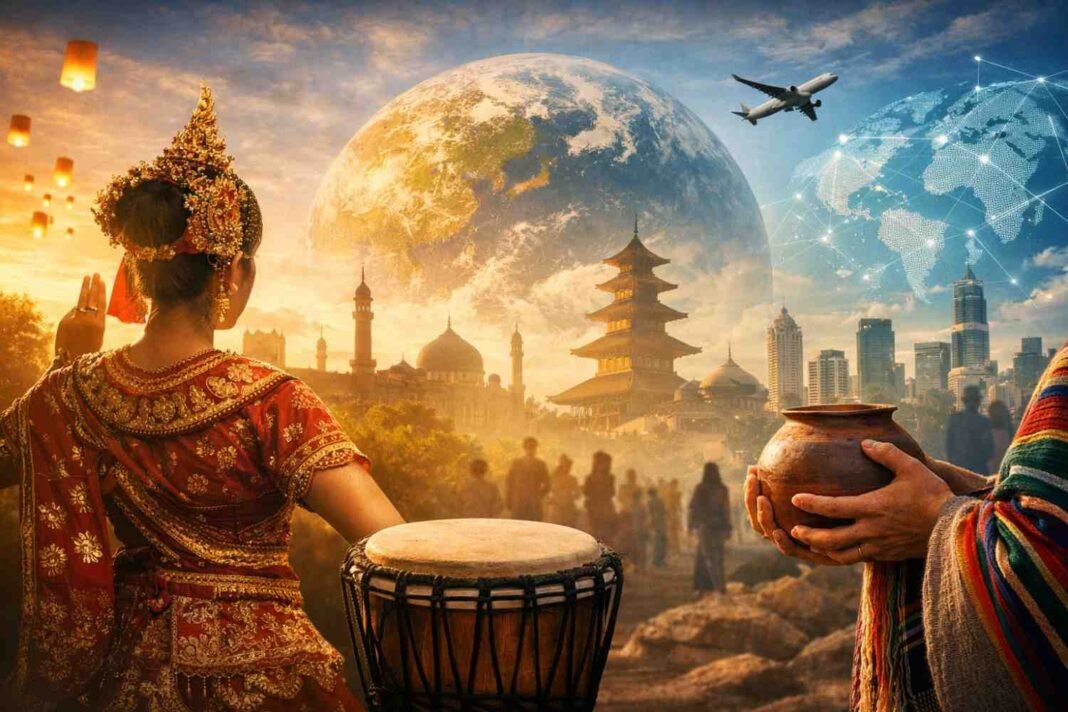

Culture is never static. It flows, adapts, resists, and reinvents itself as societies evolve. In today’s hyperconnected era—shaped by globalization, technology, migration, and social change—traditions are no longer confined to the past. Instead, they are living practices navigating modern realities. Understanding these cultural currents helps us see how traditions survive, transform, and continue to shape identity in a rapidly changing world.
The Meaning of Tradition in Modern Society
Traditions are often misunderstood as rigid customs frozen in time. In reality, they are collective agreements—stories, rituals, values, and practices—that communities choose to carry forward. What makes a tradition endure is not its resistance to change, but its ability to remain meaningful.
From language and clothing to ceremonies and food, traditions offer continuity. They help individuals locate themselves within a larger story, connecting generations through shared memory. In an age where change is constant, this sense of belonging matters more than ever.
Globalization and the Blending of Cultures
One of the strongest cultural currents shaping traditions today is globalization. Travel, digital media, and international trade have brought cultures into daily contact at an unprecedented scale.
This has led to:
- Cultural exchange, where traditions are shared, adapted, and sometimes fused
- Hybrid identities, especially among diaspora communities
- Global awareness of local customs that were once geographically isolated
For example, festivals like Diwali, Lunar New Year, or Ramadan are now celebrated far beyond their regions of origin. While some worry about dilution, others see this as cultural expansion—traditions gaining new life through wider participation.
Technology as a Cultural Catalyst
Technology has fundamentally altered how traditions are preserved and transmitted. Oral storytelling has moved to podcasts, handwritten recipes to digital archives, and local dances to viral videos.
Rather than erasing tradition, technology often:
- Documents endangered cultural practices
- Connects younger generations to ancestral knowledge
- Allows marginalized cultures to tell their own stories
Social media, in particular, has become a powerful space for cultural expression. Young creators reinterpret traditional dress, music, and rituals in modern contexts, proving that heritage and innovation are not opposites.
Generational Shifts and Cultural Negotiation
Every generation renegotiates tradition. Younger generations often question customs that conflict with modern values around equality, sustainability, or personal freedom.
This negotiation can be uncomfortable, but it is also necessary. Traditions that survive are those that can:
- Adapt without losing their core meaning.
- Respond to ethical and social change.
- Make room for diverse experiences.
For instance, many communities are reimagining traditional ceremonies to be more inclusive while maintaining their symbolic essence. This process keeps culture relevant rather than obsolete.
Migration and the Reinvention of Tradition
Migration reshapes traditions in profound ways. When people move, they carry culture with them—but the context changes.
In new environments, traditions often become:
- Stronger markers of identity
- Modified to fit new social norms
- Shared across cultures in unexpected ways
Food is a powerful example. Traditional dishes evolve based on available ingredients, local tastes, and cultural interactions, creating entirely new culinary traditions while honoring their roots.
The Tension Between Preservation and Progress
A central question in cultural discourse is how to balance preservation with progress. Some traditions are deeply tied to history and spirituality, while others may perpetuate outdated power structures.
Healthy cultural evolution requires:
- Respectful dialogue within communities
- A willingness to examine the purpose behind customs
- Recognition that culture belongs to people, not museums
Preservation should not mean stagnation. Progress does not have to mean erasure. The most resilient traditions are those that grow alongside the people who practice them.
Why Cultural Traditions Still Matter
In a fast-paced, digital-first world, traditions offer grounding. They remind us that identity is not just individual, but collective. They teach patience, respect, and continuity in an era of instant gratification.
Cultural traditions:
- Strengthen community bonds
- Foster intergenerational understanding
- Provide emotional and spiritual stability.
They also encourage empathy. Learning about others’ traditions deepens cross-cultural understanding and counters stereotypes.
Cultural Currents Shaping the Future
Looking ahead, cultural traditions will continue to evolve under the influence of climate change, digital communities, and shifting social values. The future of tradition lies not in rigid preservation, but in conscious participation.
Communities that actively engage with their heritage—questioning, adapting, and celebrating it—ensure that traditions remain alive rather than symbolic.
Conclusion: Tradition as a Living Force
Cultural Currents: Traditions in a Changing World is not a story of loss, but of transformation. Traditions are not disappearing; they are adapting to new realities while carrying the wisdom of the past.
In embracing change without abandoning roots, cultures demonstrate resilience. Tradition, at its best, is not about holding on—it is about moving forward with meaning.